Flower Batanical Illustration Review for Real Embroidery
When I first opened the Flower Batanical Illustration file, my initial reaction was one of quiet appreciation. In a sea of generic clipart and over-processed vector graphics, this piece feels like it belongs in a well-curated studio. It carries a specific mood: soft, organic, and timeless. As someone who has spent years stitching designs onto everything from denim jackets to delicate baby onesies, I know that not every digital graphic translates well into thread. This review is not about the download speed or the price point; it is about how this design performs when it leaves the screen and enters the real world of machine embroidery.
The First Stitch Impression
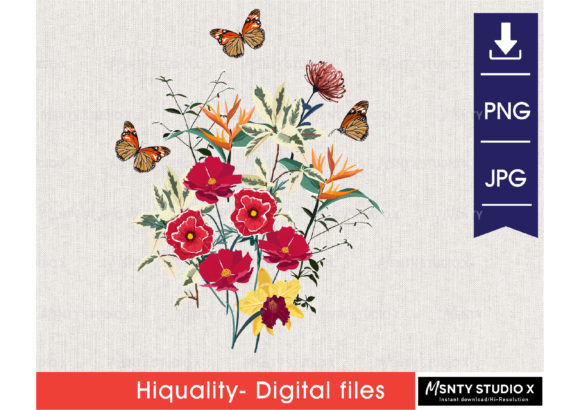
The visual personality of Flower Batanical Illustration is distinct. It leans heavily into the botanical aesthetic, suggesting a connection to nature that is both elegant and approachable. The layout feels balanced, likely designed with negative space in mind, which is crucial for embroidery. Unlike dense, cluttered graphics that often require heavy underlay and risk puckering, this illustration appears to have breathing room. For an embroiderer, this suggests that the final product will look crisp rather than muddy. The theme naturally invites a vintage or cottage-core vibe, making it perfect for projects where a touch of nostalgia is desired.
However, as a designer, I immediately started analyzing the line work. Is it too intricate? Are there tiny corners that might get lost in the fabric weave? The description mentions "Beautiful Sublimations" and "butterfly," hinting at a dual focus on floral elements and insect details. If the butterfly wings are rendered with fine lines, they present a specific challenge. Satin stitch can sometimes blur fine edges if the density isn't managed correctly. I found myself wondering how these delicate shapes would hold up on a textured surface versus a smooth canvas. The answer lies in the execution, but the source material looks promising for a high-quality finished product.
Real-World Application: A Custom Tote Bag Scenario
Let's imagine a practical scenario. You are preparing a custom order for a local boutique owner who wants a line of eco-friendly tote bags featuring unique artwork. They need something that screams "handmade" but remains professional enough to command a higher price point. This is where Flower Batanical Illustration shines. Imagine placing this design on a sturdy cotton canvas tote. The botanical theme pairs perfectly with natural fibers, creating a cohesive look that appeals to the modern consumer.
In this context, the design serves as a focal point. It doesn't need to cover the entire bag; a centered placement allows the texture of the fabric to complement the stitching. Customers visiting a craft fair or browsing an Etsy shop are drawn to items that feel authentic. An embroidered flower motif adds a tactile dimension that print-on-demand cannot replicate. The design elevates a simple $5 tote bag into a $25 boutique item. The visual appeal of the Flower Batanical Illustration enhances the perceived value of the handmade product, signaling to the buyer that care was taken in its creation.
Where to Exercise Caution
While this design has great potential, it is not a universal fit. There are specific scenarios where Flower Batanical Illustration requires careful consideration before you hit the start button on your machine. One of the primary concerns is the scale of the project. If you attempt to stitch this on a small hoop size, such as those used for hat brims or cuff bands, the fine details of the butterfly and flower petals may disappear. Small hoops often force the digitizer to simplify shapes, which can ruin the integrity of the original illustration.
Fabric choice is another critical factor. Textured fabrics like terry cloth or thick fleece can swallow up fine running stitches, making the design look flat or indistinct. Similarly, stretchy fabrics like jersey require a stabilizer strategy that prevents distortion, but even then, the curves of the flowers might shift if the tension isn't perfect. Dark fabrics present their own set of challenges; unless the thread colors chosen offer high contrast against the background, the subtle lines of the illustration could get lost in the shadow of the fabric.
Additionally, products that undergo frequent washing, such as kitchen towels or aprons, demand durability. While fill stitches generally hold up well, areas with high stitch density can become stiff and prone to cracking over time. If the design includes layered garments or curved surfaces like caps, the perspective shifts, and what looks good on a flat mockup might appear distorted once stitched. Always inspect small details and test the design on scrap fabric first to ensure the stitch density is appropriate for the intended use.
Impact on Brand and Customer Trust
For small business owners and Etsy sellers, the quality of your embroidery directly correlates to customer trust. A sloppy stitch job or a design that doesn't translate well can damage your reputation instantly. Flower Batanical Illustration, when executed correctly, contributes to brand consistency. It signals professionalism and attention to detail. When a customer receives a personalized gift with a clean, well-defined botanical design, they associate that quality with your entire brand.
This design also enhances giftability. Botanical themes are universally liked, making them safe choices for holiday gifts, wedding favors, or nursery decor. The versatility of the illustration allows it to fit into various contexts without feeling out of place. Whether it is used on a sweatshirt for a family reunion or as an embroidered patch on a denim vest, the design maintains its charm. However, to maintain this level of quality, you must verify the licensing terms. Ensure that the file allows for commercial use if you plan to sell the finished items, and confirm whether the license covers digital product previews or only physical goods.
Practical Designer Notes for Success
To get the most out of Flower Batanical Illustration, follow these practical steps before starting your production run. First, always test the design on a scrap piece of the actual fabric you intend to use. This reveals how the thread colors interact with the material and highlights any potential issues with puckering or shifting. Check the thread color contrast carefully; a light green thread on a dark green fabric might be invisible, ruining the impact of the design.
Review the stitch density in your digitizing software. If the design was created by a third party, you may need to adjust the underlay or reduce the fill density to prevent bulkiness. Confirm the hoop size requirements; if the design is large, you might need a multi-hooping technique to capture the full scope of the Flower Batanical Illustration. Inspect small details like the veins in the leaves or the antennae of the butterfly to ensure they are large enough to be stitched clearly.
It is also wise to create black and white mockups to see the silhouette of the design without the distraction of color. This helps you understand the balance and composition. Compare how the design looks on light versus dark backgrounds to decide on the best product pairing. Use the proper stabilizer for your fabric type—cut-away for stability on stretchy materials, tear-away for woven fabrics—and ensure the design works for both personal and commercial projects according to your license agreement. By taking these precautions, you transform a simple digital file into a standout component of your craft business.
Ultimately, Flower Batanical Illustration offers a solid foundation for creative entrepreneurs looking to expand their inventory. It balances artistic flair with practical usability, provided the technical aspects of embroidery are respected. For those willing to put in the preparation work, this design asset can elevate handmade products from simple crafts to professional merchandise worthy of a boutique shelf.